Everything You Need To Know About The Dipperfox Stump Grinder

In this detailed review and buyer’s guide, we explore the Dipperfox stump grinder system after a long-form interview with Joel from Dipperfox. If you’re comparing traditional wheel-based stump grinders with the drilling/grinding action of Dipperfox, this article covers who each model suits (SC400, SC600, 850 Pro), real-world productivity, maintenance and running costs, carrier set-up tips, rocky soil considerations, safety, warranty, and where to see a live demo.
- What it is: A hydraulic stump grinding system that drills and grinds the stump in situ, leaving roots to stabilise the ground and creating minimal flying debris.
- Who it’s for: Arborists, estate managers, councils, contractors, and anyone working near buildings, glass and vehicles where debris control matters.
- Key benefit: On suitable sites, Dipperfox can be significantly faster than traditional wheel grinders, with less set-up and clean-up time.
- Models: SC400 (tight access, compact carriers), SC600 (parks/estates, medium projects), 850 Pro (infrastructure and large clearance work).
Table of Contents
- How Dipperfox Works vs Traditional Stump Grinders
- Model Line-up: SC400, SC600, 850 Pro
- Speed, Workflow and Site Productivity
- Depth, Diameter and Very Large Stumps
- Compatible Carriers and Set-Up Essentials
- Maintenance, Blades and Tips
- Rocky Soils and Hidden Hazards
- Cost of Ownership: What Really Matters
- Warranty, Dealer Support and Demos
- Buying Advice: Which Model Should You Choose?
- FAQs
- Related Guides on GardenEquipmentReview
1. How Dipperfox Works vs Traditional Stump Grinders
Traditional grinders use a horizontally spinning wheel with teeth that sweep back and forth across the stump. This can be effective, but often throws debris, needs boarding near windows and cars, and creates a lot of repositioning.
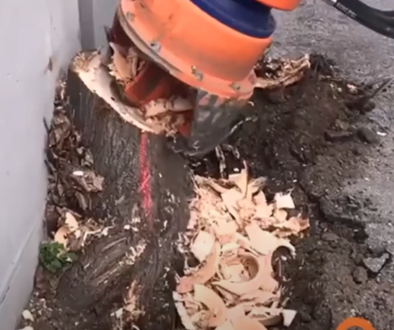
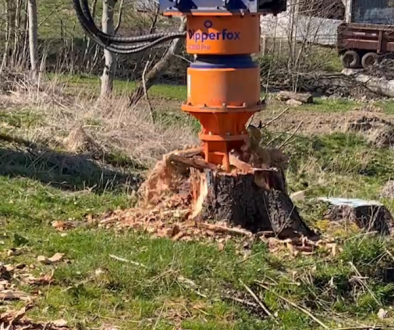
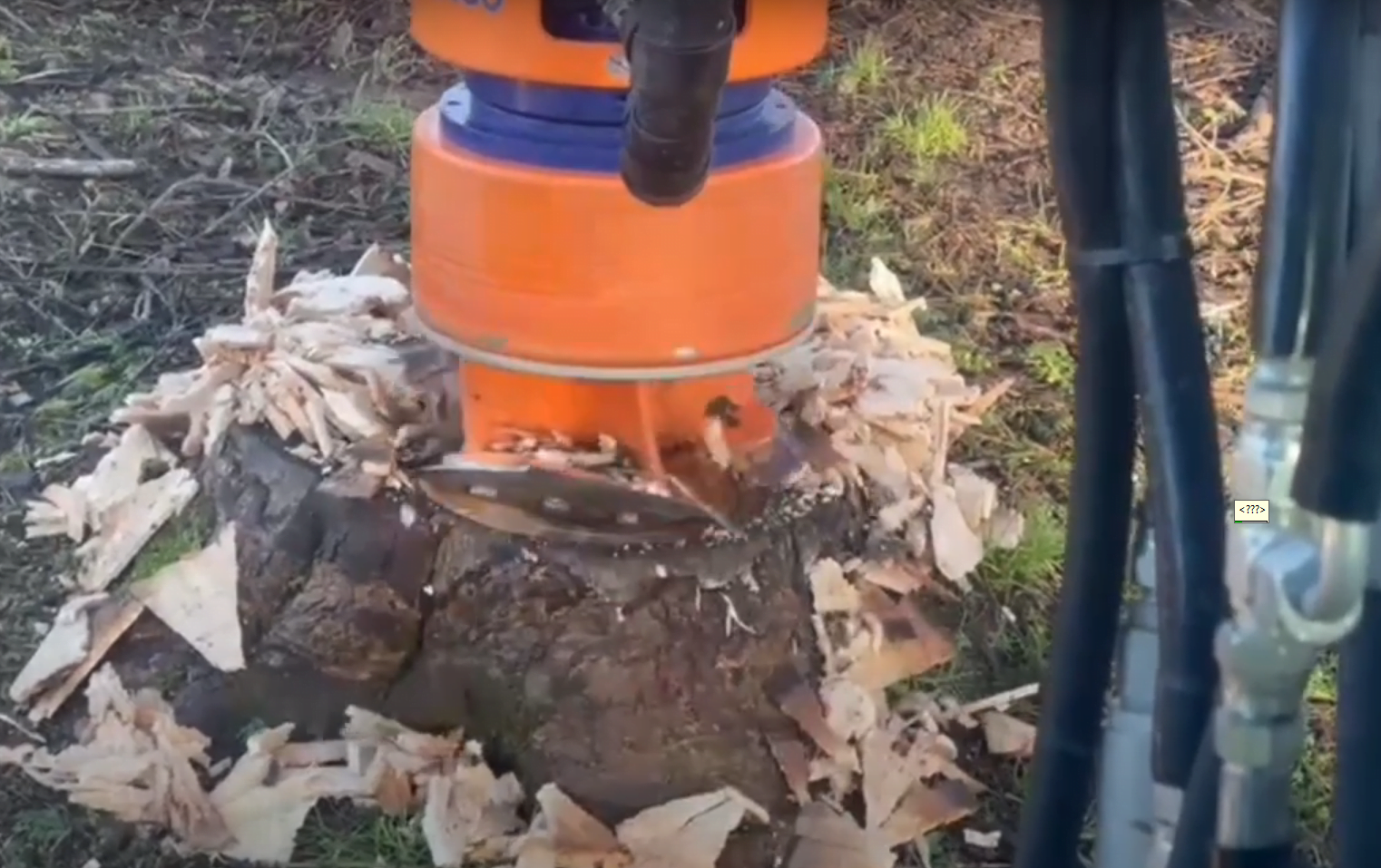
Dipperfox uses a vertical drilling/grinding action. The cone and cutting plates drive into the timber and break it down in place. The process generally produces less flying debris, which is a major advantage in domestic settings and heritage sites. Because the stump does not need to be dug out, the surrounding soil and roots remain to stabilise the ground, reducing refill and rutting on longer projects.
Related: Self-Propelled Stump Grinder or Dipperfox SC400?
A practical comparison of traditional self-propelled wheel grinders versus the SC400’s low-debris
drilling method—covering tight UK garden access, carrier options (mini excavators ~1.5–5 t,
compact loaders) and real-world speed observations.
Practical comparison of a traditional self-propelled wheel grinder versus the Dipperfox SC400 drilling method —
with notes on tight UK garden access, carrier options, and where the SC400 makes the most sense.
2. Model Line-up: SC400, SC600, 850 Pro
| Model | Best For | Typical Carriers | Notes |
|---|---|---|---|
| SC400 | Tight access, urban/domestic work, arborists, graveyards, parks | Compact loaders, skid steers, mini loaders (e.g., Avant/Multione), small excavators | Most popular; fits narrow sites and gated gardens; serrated plates recommended |
| SC600 | Estates, parks, medium-scale jobs | Compact and mid-sized carriers with suitable flow/pressure | Now supports a newly updated cone splitter; serrated plates widely used |
| 850 Pro | Infrastructure and large clearance projects | High-flow excavators and large carriers | Cutting diameter ~850 mm; working depth up to ~900 mm in real sites |
3. Speed, Workflow and Site Productivity
On suitable sites, the Dipperfox method can be markedly faster than traditional wheel grinding. The time savings come from:
- Minimal boarding and shielding: Less debris means less time spent protecting glass, vehicles and public spaces.
- Less repositioning: With the vertical approach, you often spend more time drilling and less time moving the rig.
- No hauling of stumps: You’re not extracting heavy root plates; you grind in place and move on.
In larger-scale operations, contractors report high hourly stump counts with the 850 Pro, especially when stumps can be accessed efficiently.
4. Depth, Diameter and Very Large Stumps
Typical working depth with the 850 Pro is up to around 900 mm, which is deeper than many domestic sites require. For oversized stumps with the SC400, the technique is to drill a ring around the perimeter and then work towards the centre. Not every stump is the same; species, age and moisture content all affect the grind.
5. Compatible Carriers and Set-Up Essentials
Dipperfox heads rely on correct hydraulic flow, pressure and a proper case drain. Many modern carriers ship in conservative “safe” configurations, so ensure your dealer or technician dials in the actual flow and pressure needed, and confirms the return and drain routing. If the head feels weak or slow, the carrier set-up is the first thing to check.
- SC400: Popular on compact loaders and mini-loaders; serrated plates and the X5 screw suit most regions; X2 screw is preferred for very hard, frozen or Nordic hardwoods.
- SC600: Suitable for larger compact and mid-sized carriers; now supports an updated cone splitter attachment.
- 850 Pro: High-flow excavators with approximately 250 L/min and robust system pressure (ensure the carrier can genuinely deliver the spec in real work).
6. Maintenance, Blades and Tips
Routine maintenance is straightforward: prioritise hydraulic oil health (Dipperfox recommends frequent changes around 200 hours depending on duty) and keep the cutting plates within the specified angle. A surprising number of “it’s not cutting” complaints are resolved by correcting the blade angle.
- Blade care: Flip plates in the field to the alternate edge, then sharpen during breaks. Expect long life when angles are maintained and soil contact is minimised.
- Tips: Newer D-shaped tips are designed to deflect smaller stones and release them as swarf rather than take direct impact.
7. Rocky Soils and Hidden Hazards
No system loves surprise metal, concrete or boulders. Read the feedback through the carrier; if penetration changes suddenly, pause and investigate. On sites with excavators present, it’s worth watching what comes out of trenches to gauge soil conditions. In stubborn areas you can change approach angle, clear obstructions, or work the perimeter first.
8. Cost of Ownership: What Really Matters
The two biggest savings with Dipperfox are labour time and fuel (or hire hours on the carrier). Reduced boarding, less repositioning and no stump hauling all add up. The head itself has simple scheduled maintenance; consumables are primarily oil, plates and the screw assembly over long life. Compared with traditional grinders, many operators find the overall cost per stump favourable once the workflow is optimised.
9. Warranty, Dealer Support and Demos
- Warranty: 1 year standard + 1 year upon online registration (1+1).
- Dealer coverage: A global network with factory support. If an urgent failure occurs during a time-critical project, dealers and factory can support fast swap-outs where appropriate.
- Demos and shows: Check the dealer map on the Dipperfox website for your nearest demonstration. There are frequent appearances at arborist and construction shows worldwide.
- Mostly domestic, narrow gates and lawns: SC400.
- Mixed estates, parks, heritage and mid-scale runs: SC600.
- Clearance, infrastructure and forestry edges: 850 Pro.
If your business already owns compact loaders like Avant or Multione, the SC400 is usually the simplest way to add stump capability with minimal debris and fast site turnover. For excavator fleets, the 850 Pro turns into a high-throughput specialist on open ground.
11. FAQs
How deep can it go?
On larger heads like the 850 Pro, up to around 900 mm in typical use. Most domestic stumps don’t require that depth.
What about very large stumps?
With smaller heads, drill a ring at the perimeter then work inward. The SC400 can handle oversized stumps by changing the pattern rather than forcing a single deep pass.
Do I still need a traditional grinder?
Some arborists keep a compact wheel grinder for the tightest, awkward corners. Many use Dipperfox for everything else because of the speed and low debris.
What’s the most common set-up mistake?
Carrier settings. Ensure correct flow, pressure and a proper case drain. If the head feels slow, inspect the carrier before blaming the tool.
How often do blades/tips need attention?
Flip plates in the field and sharpen regularly. Keep the cutting angle within spec to avoid polishing the stump instead of cutting.
12. Related Guides on GardenEquipmentReview
- Stump Grinder Articles and Reviews
- Compact and Mini Loaders (Avant, Multione) – Search Results
- Excavator Attachments – Search Results
- Arborist and Tree Surgery Equipment
Conclusion
Dipperfox changes the stump game for many operators. By drilling and grinding in place, you reduce debris, minimise site damage, and speed up the workflow. Choose the head that fits your tightest access and the carrier you already run, keep the blades at the correct angle, and make sure your hydraulics are set correctly. For councils, estates and contractors working near buildings and the public, the low-debris approach is a major advantage.
Next Steps
- Book a demo with your nearest dealer.
- Verify your carrier’s flow, pressure and case drain setup before the demo.
- Plan a mixed batch of stumps (small, large, different species) to see real-world results.
Disclosure: This review is based on a long-form interview and practical experience with stump grinding workflows. Always confirm current specifications with your dealer before purchasing.